
Intelligence / Feasly Cost Index
Put construction costs in context.
Compare construction-cost benchmarks by market and building type. Establish a realistic allowance, then test its financial effect.
Discuss the Feasly Cost Index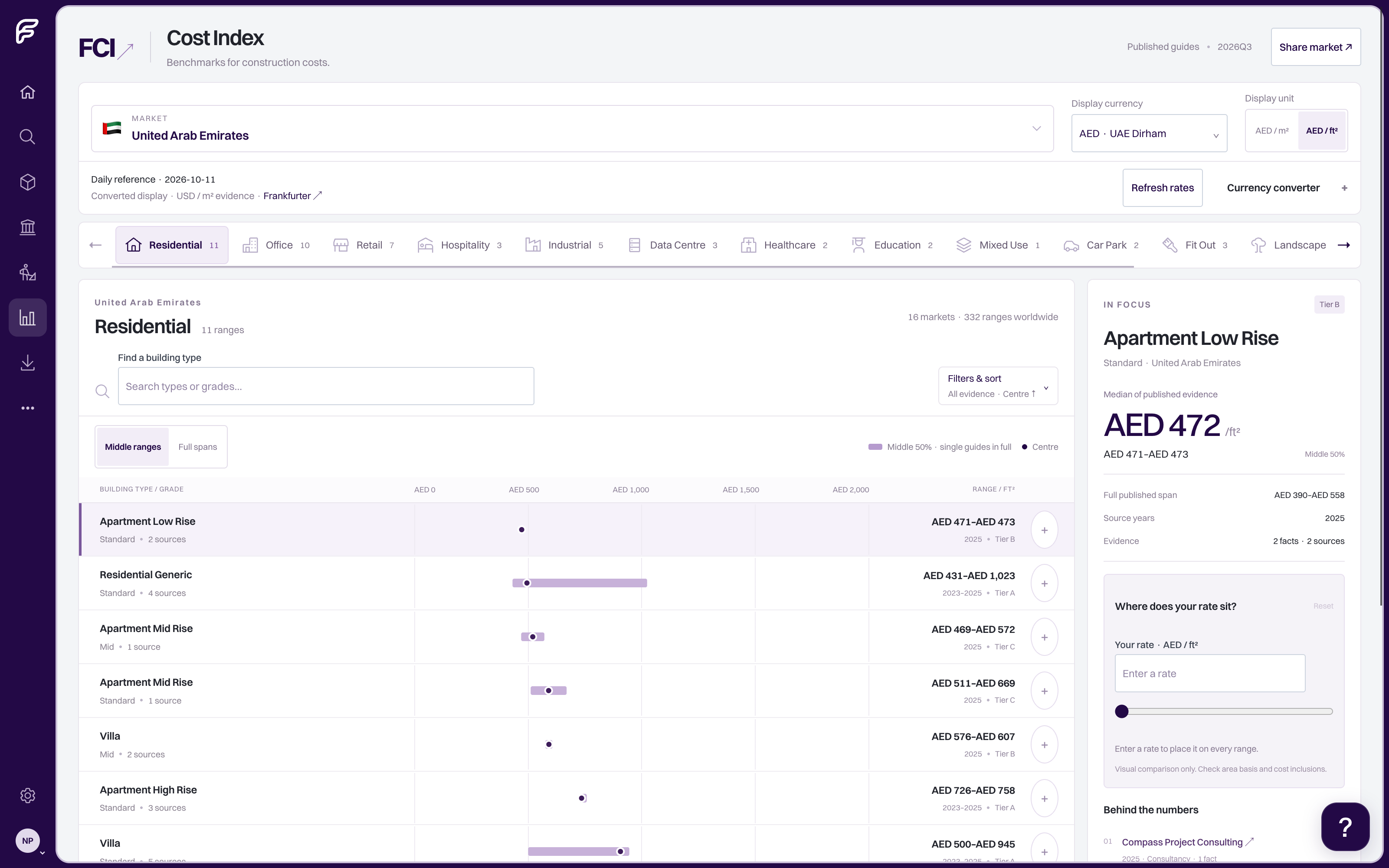
From the building to the budget
Know what’s
inside the rate.
Two buildings can have the same floor area and very different costs. Start with the specification, check the basis, then form an allowance.
Illustrative building and figures
A building,
not just a number.
- 1Structure
The frame, floor slabs and foundations.
- 2Envelope
The façade, glazing and roof specification.
- 3Interiors & services
The fit-out and building services allowance.
This example groups these works into one construction rate. It does not assign a separate cost to each component.
The same units.
The same scope.
- Area
- 2,000 m² gross internal area
- Price basis
- GBP · one assumed price date
- Included
- Structure, envelope, interiors & services
- Separate allowances
- Land, external works, fees, finance & tax
A small rate change.
A visible budget change.
Keep the building area fixed. Compare two assumed rates before taking the construction allowance into the wider feasibility.
The starting allowance for the assumed scope.
From a cost benchmark to a project allowance.
How can Feasly construction-cost data support a feasibility study?
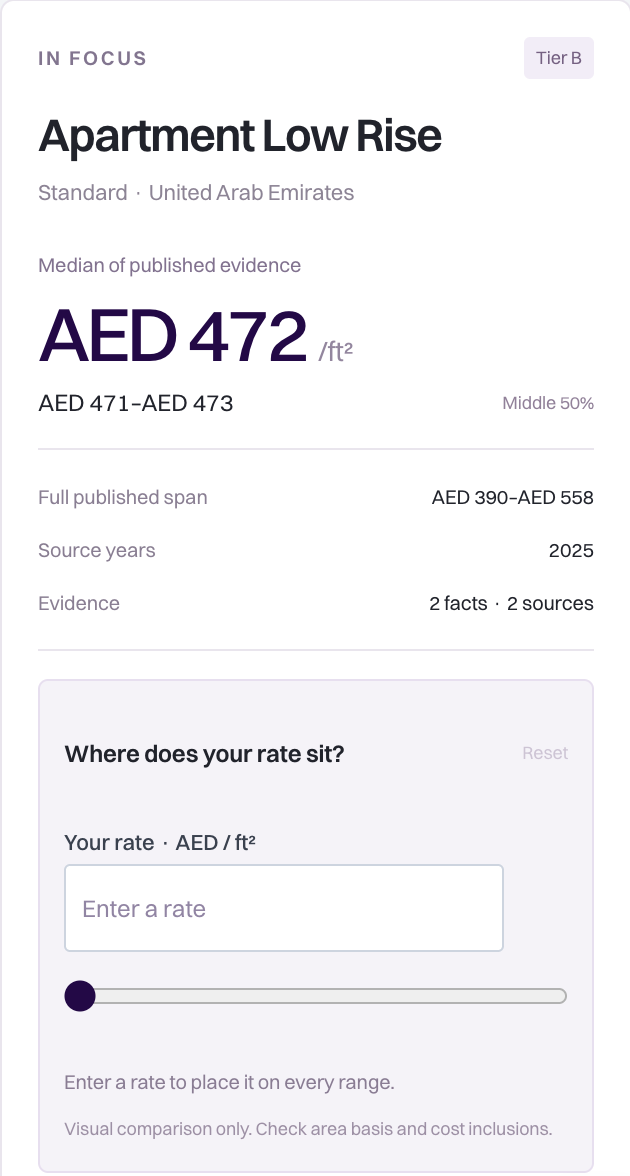
Use the Cost Index to research source-dated construction ranges by market and building type, then judge whether a range is relevant to the proposed scope. Check the source year, area measurement, specification and included costs before selecting an allowance. Carry the chosen assumption into the appraisal and test its effect on profit, cash flow and capital requirements. The benchmark helps frame an early budget; project-specific design and pricing establish what the work is likely to cost.
Does converting a benchmark into another currency update its cost year?
No. Currency conversion changes the presentation currency. It does not adjust the source year, local price movement, specification or measurement basis. Record those separately and explain any escalation or scope adjustment. This keeps a historical benchmark from appearing to be a current contractor quotation.